


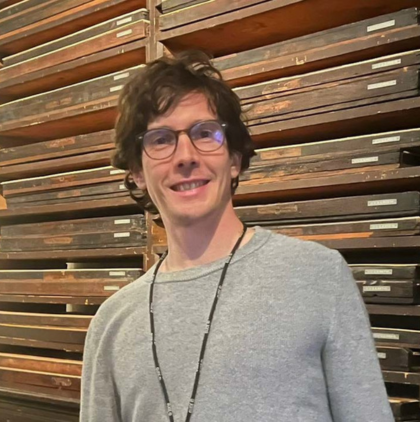
Dr. Antoine Henry
Antoine Henry is an assistant professor at Lille University (France). He focuses his research on the circulation of information, the organization of knowledge, digital systems, and artificial intelligence.
He participated in two Horizon projects:
• FairMusE, where he co-led Work Package 4 on Music Consumers & Music Diversity and worked to create a Fairness Score to improve fairness in recommendation systems.
• LibrarIn, where he contributed to T3.1 on digital transformations in libraries, focusing on AI development at the French National Library.
He also works on the LibCommon project to stimulate innovative learning and teaching practices in higher education. He achieves this by creating new partnerships with libraries to establish them as commons-based resources and learning hubs.
As a member of the research group at the Centre Internet et Société (UPR 2000 of the CNRS), he co-manages the working group on AI, art, and creativity.
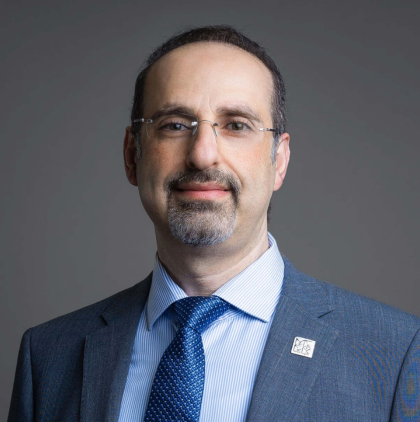
Dr. Raian Ali
Dr Raian Ali is a Professor and UNESCO Chair in Digital Technologies and Human Behaviour. He received his PhD from the University of Trento, Italy, in 2010, and has held academic positions at the University of Limerick, Ireland, and Bournemouth University, the UK, and a visiting professorship at the Education University of Hong Kong. He obtained his first degree from Latakia University, Syria. His research focuses on the intersection of technology and human behaviour, with an emphasis on digital addiction, responsible technology use, and the impact of design on wellbeing. He serves on the Steering Committee of the Persuasive Technology Society and the International Conference on Behavioural and Social Computing, and is on the editorial boards of leading journals including Behaviour and Information Technology, Journal of Responsible Technology, and Human-Centric Artificial Intelligence. He leads the $3.8 million Digital Citizenship Cluster in Qatar, involving multiple projects, over 15 national and international partners, and a team of more than 50 researchers and staff. He also provides consultancy at national and international levels.
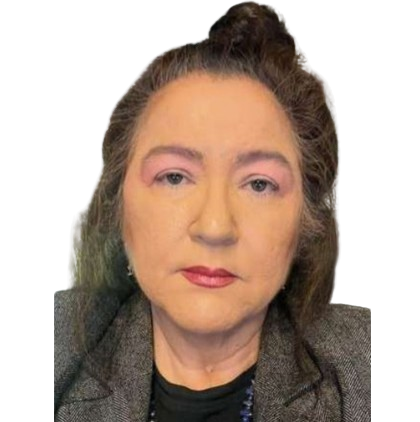
Dr. Pamela Louderback
Pamela Louderback serves as the Library Director at Northeastern State University in Oklahoma. She has over thirty-five years of experience in the library field, including administration, original cataloging, reference, and higher education instruction. As a Fulbright Scholar to the United Kingdom (2010–2011) in Governance/Public Policy at Queen's University, Belfast, Northern Ireland, her research focused on the comparison of government-directed educational policies and U.S. Indigenous language revitalization policies. She continues to serve the Fulbright Commission as an Institutional Faculty Liaison. She holds an Open Education Network's Certificate in Open Educational Practices (OER Librarianship) and a Creative Commons Certificate for Academic Librarians and Educators. She also serves on the Latin American/Indigenous Peoples of America Funnel program to present culturally respectful subject heading proposals to the Library of Congress. Her research and publications focus on Indigenous academic success, integrating curriculum technology into the classroom, and assisting underrepresented students in the transition to college.