


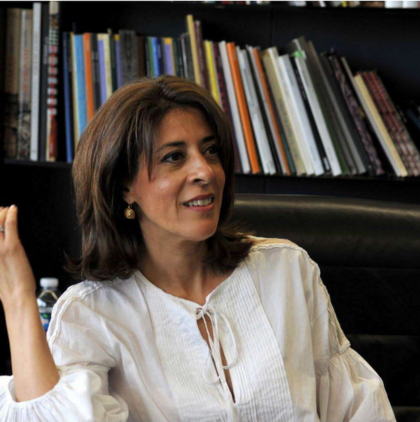
Mona Khazindar
First Arab woman appointed Director-General of the Institut du Monde Arabe in Paris in 2011, having headed the Institut’s Department of Modern and Contemporary Arab Art from 1987. She joined the Saudi Ministry of Culture in 2019, where she held various positions including CEO of the Museums Commission, and is now editor-at-large of Matahef, the Arab world’s first bilingual digital magazine dedicated to museum practice and cultural heritage across the MENA region. She has served on the boards of cultural institutions including MUCEM, the Institute of Art in the Arab World at the Lebanese American University and Villa Hegra, and on the Saudi Shura Council (2020–2024). She published Visions from Abroad in three languages (Skira and Ithra, 2019) and edited The Art Library, a collection on Saudi and Arab artists (Misk Art and Rizzoli).
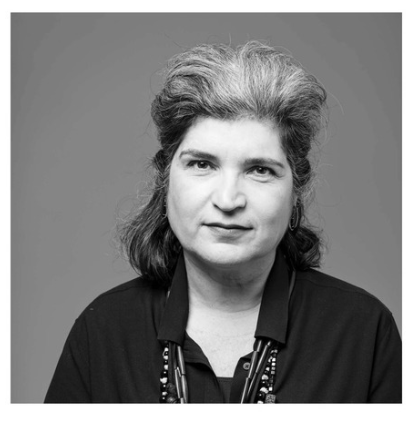
Sarah Chalabi
Sarah Chalabi is co-founder of Dongola Limited Editions, a Beirut publishing house creating limited-edition artist’s books conceived as works of art. A trained journalist with two decades of writing between Beirut, Paris, Kuwait and New York, she shapes Dongola’s editorial vision. Under her leadership, Dongola launched the Dongola Architecture Series (DAS), monographs on leading Arab architects including Ammar Khammash, Nasser Rabbat and Bernard Khoury. During the 2020 lockdown, Dongola initiated Cities Under Quarantine: The Mailbox Project, mailing handmade books to 57 Arab artists across 22 cities. The resulting artist’s books have since been exhibited at Villa Romana in Florence, Mathaf in Doha and the Saudi Museum of Contemporary Art. Dongola’s most recent release, Fadi Melhem’s A Memory That Lasts and Lasts and Lasts, is part of a long-term initiative launched in 2024 to support artists at the Beirut Printmaking Studio.
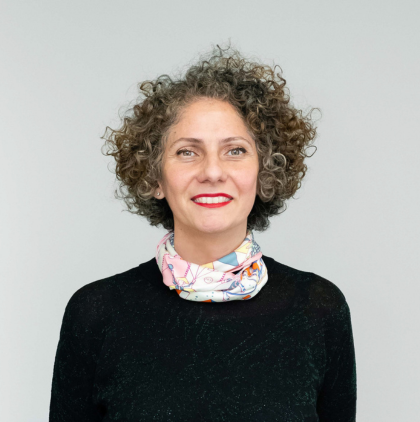
Ala Younis
Ala Younis is an artist whose practice extends into curatorial, film, and publishing projects. She has held solo exhibitions in Amman, Dubai, Sharjah, New York, London, Seville, Prague, and Abu Dhabi, and has participated in major biennials including Venice, Istanbul, Gwangju, Sharjah, and Diriyah. In 2012, she co-founded Kayfa ta, an independent publishing project that has produced fifteen titles and organised group exhibitions on publishing. She was co-head of Berlinale Forum Expanded (2021–24), co-Artistic Director of the Singapore Biennale (2022–23), and a Research Scholar at Al Mawrid Arab Center for the Study of Art at NYU Abu Dhabi (2022–25). Her awards include the Cairo Youth Salon Award in Painting for Non-Egyptians and an award from the Jordanian Artists Association in Amman. She holds degrees in architecture from the University of Jordan and in visual cultures from Goldsmiths, University of London, and is currently pursuing a DPhil at the University of Oxford.