



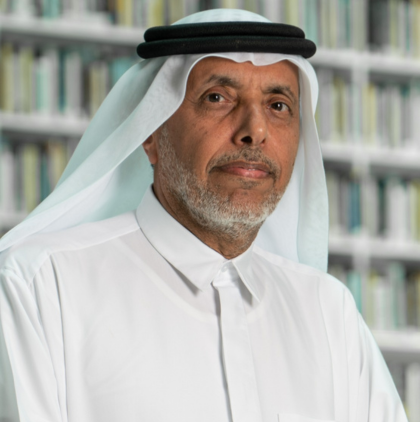
H.E. Dr. Mohammed Salem Al Mazrooei
Member of the Board of the Mohammed Bin Rashid Al Maktoum Library Foundation and signatory of the Summit’s participation agreements on behalf of the Foundation.
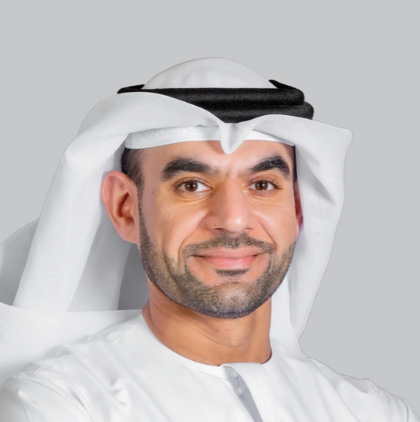
H.E. Younus Al Nasser
With a visionary approach to digital transformation in the era of the Fourth Industrial Revolution, His Excellency Younus Al Nasser has devoted his career and efforts to advancing the implementation of data science and its applications in the city of Dubai. His work underscores the strategic importance of data as a foundational asset for informed decision-making and sustainable progress.
Recognizing the transformative power of data early on, Al Nasser co-founded the city’s Open Data Committee in 2014, laying the groundwork for robust governance frameworks that enable open data access for developers, researchers, entrepreneurs, and policymakers across industries.
His leadership journey gained momentum when he assumed the role of Chief Executive Officer of the Dubai Data Establishment from 2016 to 2021. During this tenure, he pioneered governance models and advanced standards for data sharing within an integrated digital ecosystem. A key milestone in this period was the launch of the "Data Champions Network," an initiative fostering data literacy across government and semi-government entities. He also spearheaded the creation of Dubai Pulse, the city’s first open data-sharing platform, and developed strategies to integrate the private sector into Dubai’s data economy, paving the way for advancements in artificial intelligence, data analytics, and enhanced decision-making. His contributions directly supported Dubai’s Economic Agenda (D33) by driving digital innovation and economic growth.
Through these achievements, Al Nasser cemented his reputation as a leading figure in digital transformation, both locally and globally. In recognition of his impact, he was appointed Chief Executive of the Dubai Data & Statistics Establishment under Digital Dubai in 2023.
In 2025, a resolution was issued establishing the Data and Statistics Committee in the Emirate of Dubai, with Al Nasser appointed as Vice Chairman. The committee is tasked with strategically organizing and coordinating efforts among government and non-government entities to accelerate the development of an integrated, interconnected digital ecosystem—driven by advanced artificial intelligence and data analytics technologies.
With this appointment, Al Nasser embarked on a new phase in his career, during which he has been instrumental in shaping and executing Dubai’s digital strategy, aiming to digitalize life in Dubai and establish the city as a global digital capital and the world’s most seamless place to live in alignment of the wise leadership’s vision. His leadership has guided Dubai’s transition from e-Government to Smart Dubai and, ultimately, Digital Dubai—leveraging data science and artificial intelligence to create smarter, more efficient urban experiences.
Al Nasser combines graciousness, clarity, and persuasive power with exceptional leadership and communication skills. His contemporary and polished style enables him to engage and inspire diverse audiences, making him a sought-after speaker. He effectively drives awareness and adoption of data-driven transformation while championing the role of technology in advancing society and achieving Dubai’s strategic objectives.
A defining moment in his career came during the COVID-19 pandemic when, as a member of the Dubai COVID-19 Command and Control Center, he played a critical role in leveraging data and technology to ensure the safety and well-being of Dubai’s residents. His efforts helped position Dubai as one of the few global cities that maintained business continuity throughout the crisis, ensuring that daily life and economic activity never came to a halt.
Currently, as Chief Executive of the Dubai Data & Statistics Establishment, Al Nasser oversees the execution of Dubai’s digital vision while anticipating future technological trends. A prime example of his strategic foresight is his leadership in developing Dubai’s Data Center Economy framework, aimed at establishing the city as a global hub for AI-powered, sustainable data centers. Approved by the Executive Council, this initiative will increase Dubai’s data center capacity fivefold and generate over AED 14.3 billion in added value by 2028.
In leading the city’s data and statistics ecosystem, Al Nasser continues to position data as a strategic asset, integral to decision-making, policy development, programs, and plans—while steadfastly upholding the principles of reliability, transparency, and the protection of individual and organizational privacy. He has championed the use of synthetic data to enhance AI applications while ensuring privacy protection, and he has pioneered real-time, interconnected data lakes to support advanced analytics, forecasting, and evidence-based governance. H.E also spearheaded the development of interconnected real-time database, utilizing advanced methodologies and cutting-edge data science and analytics techniques to enable forecasting across multiple domains. This initiative aims to empower decision-makers with accurate data and statistics while generating significant economic and social value from the city’s data assets.
Al Nasser’s contributions extend beyond Dubai, reinforcing his role as a key player in the UAE’s digital transformation. He is a member of the UAE Council for Artificial Intelligence and Blockchain, which shapes policies that accelerate AI adoption and innovation. Additionally, he serves as Vice Chair of the United Nations’ Global Councils on Sustainable Development Goals, collaborating with international decision-makers to drive innovative projects that support global sustainability.
He also served as Vice Chair of the United Nations’ Global Councils on Sustainable Development Goals—a multidisciplinary network of decision-makers, international organizations, academic institutions, non-profits, and private sector leaders collaborating to develop innovative projects and explore creative ideas that advance the global implementation of the Sustainable Development Goals.
He also holds leadership roles as Vice President and Board Trustee of the Mohammed Bin Rashid School of Government, a member of the National Statistics Committee, a member of the Higher Committee for the Dubai Cashless Initiative, a member of the Steering Committee for Measuring Workforce Productivity in the Government of Dubai, and a Board Member of the Dubai Media Council. His past positions include Assistant Director-General of Smart Dubai and Project and Security Systems Manager at the Dubai Electronic Security Center, where he led mission-critical digital initiatives. He holds a degree in Business Information Technology from the Higher Colleges of Technology in the UAE.
Throughout his career, Al Nasser has been the driving force behind numerous data and statistics initiatives, including the Dubai Dashboard, Dubai Registers, the Dubai Data & AI Platform, the Real-Time Census Initiative, and key economic and social surveys such as the Economic Survey, Household Income Survey, and Labor Force Survey.
Despite his demanding professional commitments, he makes time for his personal passions, including desert camping and cycling—activities that reflect his appreciation for balance and exploration in both his personal and professional life.

H.E. Abdullah Majed Al Ali
Director General of the National Library and Archives of the United Arab Emirates, the federal institution responsible for the nation’s documentary memory, national bibliography and public access to archival collections.
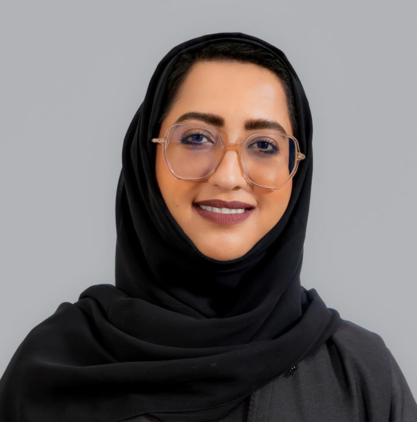
Shatha Amin Al Mulla
Senior official at the UAE Ministry of Culture; moderates the institutional plenary on the responsibilities of knowledge institutions.